Starting the Chartered Accountancy (CA) course is a big decision. When you tell people that you want to become a CA, the reactions are usually the same – respect, admiration, and comments like “CA banega toh life set hai”. Coaching institutes show success stories, rank holders, and fancy packages. What is rarely discussed is the real journey behind the CA tag.
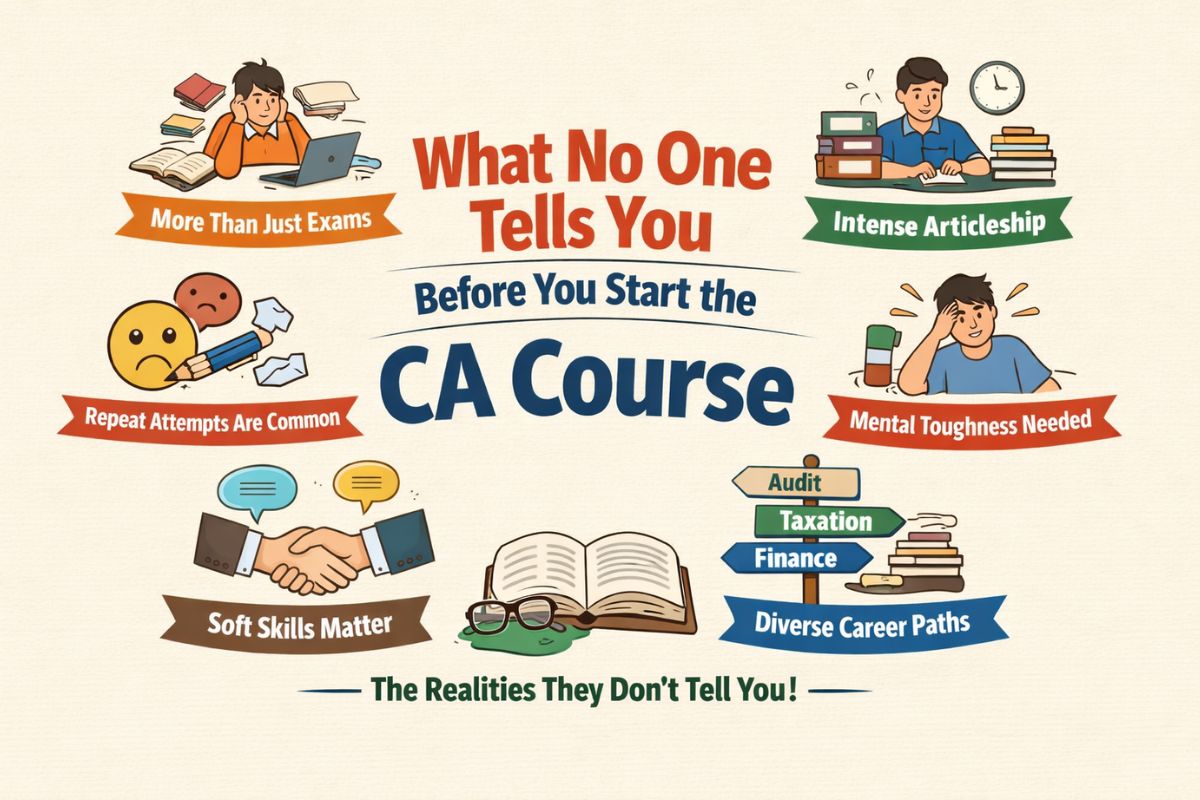
This article is not meant to scare you. It is meant to prepare you. If you understand the realities early, you can plan better, stay mentally strong, and complete the course with clarity. Let’s talk honestly about what no one tells you before you start the CA course.
The CA Course Is a Test of Consistency, Not Just Intelligence
One of the biggest myths is that only “very intelligent” students can become CAs. In reality, the CA course tests discipline, consistency, and patience far more than raw intelligence.
You will meet students who were average in school but cleared CA because they studied regularly. At the same time, you will see toppers struggle because they could not maintain consistency. The syllabus is vast, and the exams are detailed. If you skip studies for weeks thinking you will “cover later”, the pressure becomes unbearable.
What matters most is showing up every day, even when motivation is low. Small daily efforts matter more than last-minute marathon study sessions.

Clearing Exams Is Only One Part of the Journey
Most aspirants think CA is only about clearing Foundation, Intermediate, and Final exams. The truth is, articleship (practical training) is equally important and sometimes even more challenging.
During articleship, you are not a student anymore. You are a trainee professional. You will deal with audit files, tax returns, client deadlines, and real responsibilities. Many students are shocked by the workload and long hours, especially during audit season.
No one tells you that balancing articleship work and exam preparation is one of the hardest parts of the CA journey. You will often feel tired, mentally drained, and short on time. Learning how to manage your energy becomes more important than managing your timetable.
Articleship Experience Depends Largely on Where You Work
Another uncomfortable truth is that not all articleships are equal. Your learning depends a lot on the firm, the partners, and the team culture.
- In some firms, you get structured exposure, guidance, and learning opportunities.
- In others, you may end up doing repetitive work with little explanation.
This does not mean a small firm is bad or a big firm is perfect. What matters is whether you are curious and proactive. You will often need to ask questions, request exposure, and take initiative. Waiting silently rarely helps.
Your articleship years shape your confidence, communication skills, and professional mindset. Do not treat them lightly.
The Course Can Be Mentally Exhausting
This is something very few people talk about openly. The CA course can take a toll on your mental health.
You may experience:
- Self-doubt when results are delayed
- Pressure from family or relatives
- Comparison with friends who chose other careers
- Fear of repeated attempts
It is completely normal to feel low at times. Failing an attempt does not mean you are incapable. Many successful CAs today cleared the course in multiple attempts. What matters is learning from each attempt and continuing with a clear plan.
You must learn to separate your self-worth from your exam results. You are more than a marksheet.
The CA Tag Does Not Guarantee Instant Success
There is a belief that once you become a CA, high salary and respect automatically follow. While the CA degree opens doors, what you do after qualifying matters a lot.
Your initial salary may not be as high as social media makes it look. Growth depends on:
- Your articleship exposure
- Your communication skills
- Your willingness to learn
- Your ability to adapt to changing roles
CA is a long-term career. The real benefits come with experience, not immediately after qualification.
Soft Skills Are as Important as Technical Knowledge
ICAI trains you well in accounting, taxation, and auditing. But soft skills are largely self-learned.
You will realise during articleship and jobs that skills like:
- Clear communication
- Professional email writing
- Time management
- Client handling
- Teamwork
are extremely important.
If you cannot explain your work properly, your technical knowledge loses value. Start improving these skills early. Simple habits like reading, speaking confidently, and asking questions can make a huge difference.
Multiple Attempts Are More Common Than You Think
Social media mostly highlights first-attempt success stories. This creates unnecessary pressure. The reality is that many CA students take multiple attempts, especially at the Final level.
Taking more time does not mean failure. The CA course is not a race. Everyone’s journey is different. What matters is that you keep improving with each attempt instead of repeating the same mistakes.
You should plan your studies realistically, not emotionally. Honest self-assessment is key.
You Will Need to Say No to Many Things
CA requires sacrifices. There will be times when you miss:
- Family functions
- Festivals
- Trips with friends
- Social outings
This does not mean you should isolate yourself completely, but you will need to prioritise. Learning to say no without guilt is an important skill you develop during this course.
Remember, these sacrifices are temporary, but discipline built during this phase helps you throughout your career.
Career Options After CA Are Wide, But Competitive
One positive truth is that CA gives you multiple career options. You can explore:
- Audit and assurance
- Taxation (direct or indirect)
- Corporate finance
- Consulting
- Risk and compliance
- Practice or entrepreneurship
However, competition is high. Many roles require additional skills, certifications, or practical exposure. Continuous learning does not stop after qualification.
If you remain flexible and curious, the CA degree becomes a powerful foundation.
How You Approach the Course Matters More Than the Course Itself
At the end of the day, CA is not just about becoming a Chartered Accountant. It teaches you:
- Discipline
- Resilience
- Problem-solving
- Professional ethics
Students who treat the course as a learning journey, not just an exam race, come out stronger. If you respect the process, seek guidance, and stay honest with yourself, the CA course can truly transform you.
Calling all CA dreamers!
🔴 Are you tired of searching for the perfect articelship or job?
Well, fear no more! With 15,000+ students and professionals already on board, you don't want to be left behind. Be a part of the biggest community around! Join the most reliable and fastest-growing community out there! ❤️
And guess what? It’s FREE 🤑
✅ Join our WhatsApp Group (Click Here) and Telegram Channel (Click Here) today for instant updates.