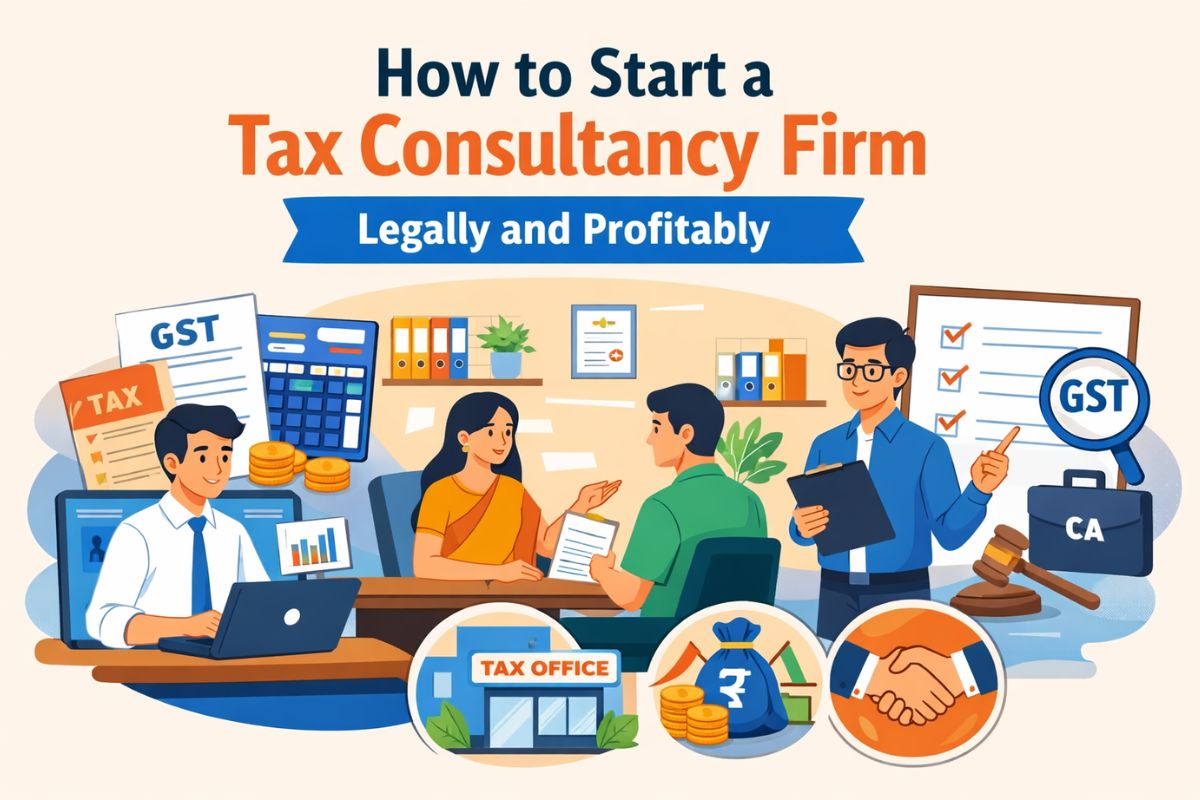
Starting a tax consultancy firm is one of the best career options for CA students, newly qualified CAs, tax practitioners, and even finance graduates who understand taxation. You do not need a big office, heavy investment, or a strong English background. What you need is clear tax knowledge, legal setup, discipline, and trust-building skills.
What Is a Tax Consultancy Firm?
A tax consultancy firm is a professional service business where you help people and businesses handle their tax work.
Your work mainly includes:
- Filing income tax returns (ITR)
- Handling GST registration and returns
- Doing tax planning
- Replying to notices from Income Tax or GST department
- Helping businesses stay compliant with tax laws
In simple words, clients pay you to take care of their tax tension so that they can focus on their work or business.
Who Can Start a Tax Consultancy Firm?
Many students think that only a CA can start a tax consultancy firm. That is not true.
You can start a tax consultancy firm if you are:
- A Chartered Accountant (CA)
- A CMA or CS (within permitted scope)
- A tax practitioner with experience
- A commerce graduate with good tax knowledge
- Someone who has worked in a CA firm and understands tax filing
Important to understand:
If you are not a CA, you cannot sign audit reports, but you can still earn very well from:
- ITR filing
- GST returns
- Consultancy
- Notice handling (non-representational)
Many non-CAs earn a stable income only from return filing and GST work.
Steps to Start a Tax Consultancy Firm Legally and Profitably
Step 1: Decide What Tax Services You Will Offer
This is where most beginners make mistakes. They try to offer all services at once, which creates confusion and errors.
Best Services to Start With
If you are a beginner, focus on:
- Income tax return filing (salaried people)
- ITR filing for small businesses
- GST registration
- Monthly or quarterly GST returns
- TDS returns
- Basic tax advisory
You do not need audit, litigation, or high-level advisory in the beginning.
Start small. Grow slowly.
Step 2: Choose the Right Legal Structure
You must choose a legal structure for your firm. This decides how your business will run.
Option 1: Sole Proprietorship (Best for Beginners)
- Single owner (you)
- Very easy to start
- Low compliance
- Low cost
This is best for 90% beginners.
Option 2: Partnership Firm
- Two or more partners
- Partnership deed required
- Shared responsibility and profit
Option 3: LLP
- Better professional image
- Limited liability
- Higher compliance and cost
If you are starting alone, sole proprietorship is enough.
Step 3: Legal Registrations Required
You cannot run a professional firm without legal registration.
PAN
- Use your personal PAN or firm PAN
- Mandatory for tax-related work
Bank Account
- Open a current account in firm name
- Keep personal and business money separate
GST Registration
GST registration is required if:
- Your turnover crosses the prescribed limit, or
- Your clients demand GST invoice
Many consultants take GST registration voluntarily to look professional.
Professional Tax (If Applicable)
- Depends on your state
- Mandatory in many states
Step 4: ICAI Rules (For Chartered Accountants)
If you are a CA, you must follow ICAI rules:
- Follow code of conduct
- Use approved trade name (if required)
- Do not advertise aggressively
- Maintain professional ethics
Do not worry. Simple compliance is enough if you work honestly.
Step 5: Office Setup – Keep It Simple
You do not need a fancy office to start a tax consultancy firm.
Office Options
- Home office (most recommended)
- Small rented office
- Shared or co-working space
Basic Things You Need
- Laptop or desktop
- Printer and scanner
- Internet connection
- Comfortable chair and table
Clients care about correct work and trust, not office interiors.
Step 6: Software and Tools You Must Have
Good tools save time and reduce mistakes.
Essential Tools
- Income tax return filing software
- GST return filing software
- Excel (very important)
- PDF editor
- Cloud storage like Google Drive
Start with basic versions. Upgrade only when your work increases.
Step 7: How Much Money Is Required to Start?
You can start a tax consultancy firm with very low investment.
Approximate Cost
- Laptop (if already available): ₹0
- Software: ₹10,000–₹25,000 per year
- Office setup: ₹5,000–₹15,000
- Registration costs: Minimal
You can start within ₹30,000–₹50,000 easily.
Step 8: How to Get Your First Clients
Getting clients is the biggest challenge, but also the easiest if done correctly.
Friends and Family
Tell everyone clearly:
- What services you offer
- How you can help them
Ask for referrals politely.
Local Businesses
Visit:
- Shopkeepers
- Small traders
- Freelancers
- Startups
Explain your service in simple language.
Old Contacts
- Articleship seniors and juniors
- Office colleagues
- Past employers
Online Presence
- Google Business Profile
- Simple one-page website
- WhatsApp Business
Even 10–15 regular clients can give stable income.
Step 9: Pricing Your Tax Services Correctly
Pricing is very important. Do not work for very low fees.
Common Market Fees (Approximate)
- ITR (Salaried): ₹1,000–₹3,000
- ITR (Business): ₹3,000–₹8,000
- GST Registration: ₹1,500–₹3,000
- Monthly GST Returns: ₹2,000–₹6,000
- Notice Reply: ₹3,000 and above
Increase your fees with experience and confidence.
Step 10: How to Make Your Firm Profitable
Focus on Regular Clients
Monthly GST clients give a fixed income.
Offer Annual Packages
Instead of charging per work, offer yearly packages.
Maintain Discipline
- Track deadlines
- Follow up for documents
- Keep payment records
Late filings destroy trust.
Step 11: Build Trust and Reputation
Tax work involves money. Trust is everything.
How to Build Trust
- Be honest with clients
- Do not promise tax savings illegally
- Explain risks clearly
- Keep client data safe
- Respond on time
One satisfied client brings many referrals.
Step 12: Common Mistakes to Avoid
- Starting without proper tax knowledge
- Ignoring legal registration
- Charging very low fees
- Missing deadlines
- Depending on one client only
- Not upgrading skills
Avoid these mistakes to survive long-term.
Step 13: When and How to Grow Your Firm
After 1–2 years:
- Hire a junior or assistant
- Add advisory services
- Shift to LLP
- Open a second office
Grow only when your systems are strong.
Final Thoughts
Starting a tax consultancy firm is not risky, but it needs patience and discipline. You will not become rich in one month, but within one or two years, you can build a stable income and respected professional identity.
If you are consistent, honest, and client-focused, a tax consultancy firm can give you long-term financial security and independence.
Calling all CA dreamers!
🔴 Are you tired of searching for the perfect articelship or job?
Well, fear no more! With 10K+ students and professionals already on board, you don't want to be left behind. Be a part of the biggest community around! Join the most reliable and fastest-growing community out there! ❤️
And guess what? It’s FREE 🤑
✅ Join our WhatsApp Group (Click Here) and Telegram Channel (Click Here) today for instant updates.