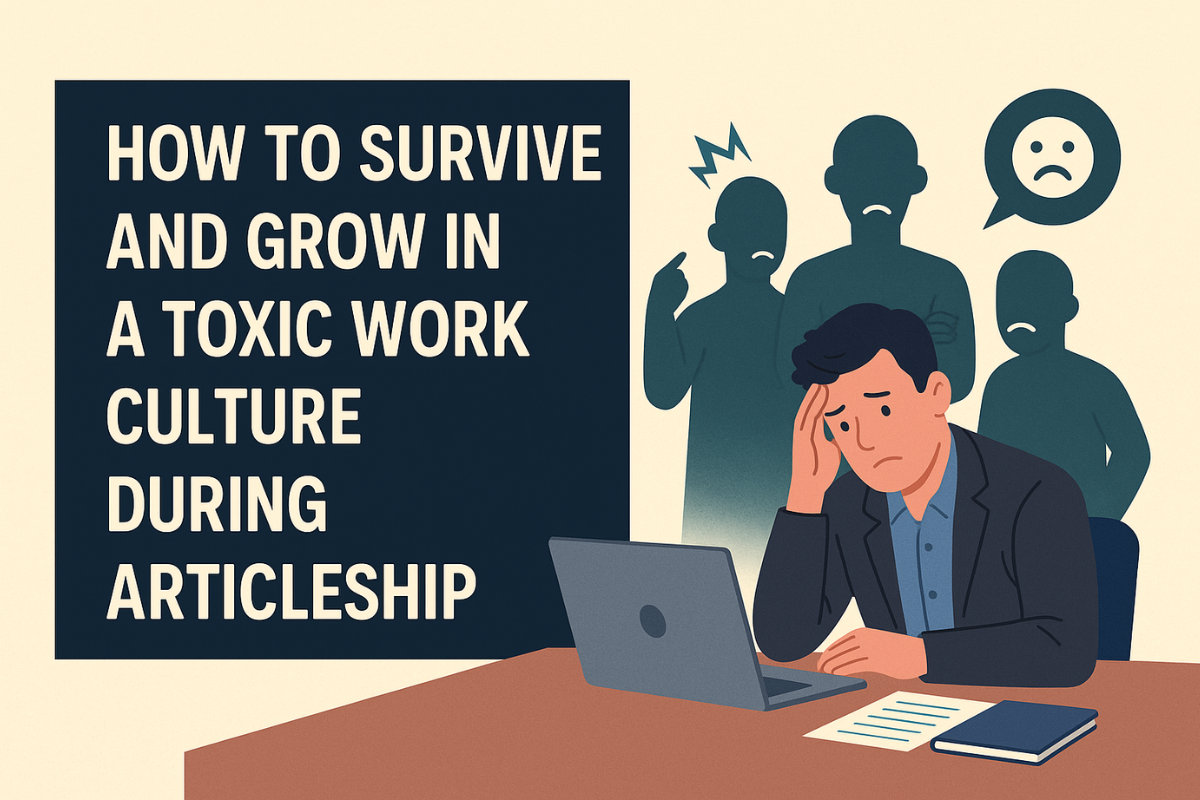
Articleship is supposed to be a learning phase. It is where you gain practical exposure, understand how the profession actually works, and slowly grow into a confident professional. But the reality is not always like this. Many students enter articleship with excitement and end up feeling stressed, undervalued, and mentally exhausted because of a toxic work culture.
If you are going through this phase right now, you should know one thing clearly – you are not weak, and you are not alone.
Toxic work culture during articleship is more common than people openly admit. The real challenge is learning how to handle it without damaging your mental health or your long-term career.
This article will help you understand why toxic work culture exists during articleship, how it affects you, and most importantly, what you can realistically do to protect yourself and still grow professionally.
Why Articleship Environments Often Become Toxic
Before discussing solutions, you must understand the root of the problem. Articleship sits at the bottom of a strict hierarchy. You are a trainee, you depend on seniors and principals for work exposure, attendance, and sometimes even exam leave. This power imbalance often becomes the foundation of toxic behaviour.
In many offices, pressure flows from the top. Seniors face client deadlines, partners face regulatory pressure, and frustration often trickles down to articles. Over time, shouting, blame culture, and unreasonable expectations become normalised. Sadly, in some places, toxicity is wrongly justified as “training” or “toughening you up for the profession.”
Once you understand that much of this toxicity is systemic and not personal, it becomes easier to respond with clarity instead of self-doubt.
Common Signs of Toxic Work Culture During Articleship
Toxicity does not always mean shouting or open abuse. In fact, many toxic environments look “normal” from the outside. Here are some signs that you should take seriously.
You may notice that mistakes are treated as personal failures rather than learning opportunities. Even small errors lead to public embarrassment or sarcastic comments. There may be constant comparison between articles, unhealthy competition, or favouritism.
Work hours are another sign. If you are regularly asked to stay late without any planning, rest, or respect for your exam schedule, it shows lack of empathy. You may also experience silent treatment, ignoring messages, or blaming articles for issues beyond their control.
If you frequently feel anxious on Sundays, fearful of messages from office, or mentally drained even after doing your best, these are not “normal articleship struggles.” These are serious red flags.
How Toxic Work Culture Affects You in the Long Run
Many students try to “adjust” by telling themselves that this phase will pass. While articleship does end, the impact of toxicity can last much longer if ignored.
Mentally, you may experience loss of confidence, self-doubt, or constant stress. Professionally, fear of making mistakes kills learning. You stop asking questions, stop experimenting, and only focus on survival.
Worst of all, prolonged exposure to toxic behaviour can make you believe that this is how work culture is supposed to be. That mindset follows you into future jobs, relationships with colleagues, and even leadership roles later.
Handling toxicity is not just about surviving articleship. It is about protecting the professional you are becoming.
First Rule: Stop Blaming Yourself
When you are criticised regularly, it is easy to believe that you are genuinely incompetent. This is the biggest mental trap during articleship.
You must understand that learning involves mistakes. Articleship is not about perfection; it is about progress. If you are sincere, punctual, and trying to improve, then continuous humiliation says more about the system than about you.
Separate constructive feedback from toxic behaviour. Constructive feedback teaches you how to do better. Toxic feedback only makes you feel smaller without guidance. Knowing this difference will protect your self-esteem.
Learn to Set Silent but Strong Boundaries
You may think boundaries are impossible during articleship, but boundaries do not always mean confrontation.
Start with small actions. Avoid participating in gossip or complaining sessions. Keep conversations professional. Do not overshare personal stress with people who may misuse it.
If unrealistic deadlines are given, communicate clearly and calmly rather than silently suffering. You can say that you will try your best and ask which tasks should be prioritised. This shifts the responsibility back without sounding defensive.
Your body language, tone, and consistency matter. Over time, people understand how much they can push you.
Focus on Skill-Building Even in a Bad Environment
Even in toxic offices, work exposure exists. Your mindset should be: “I may not control the culture, but I will extract maximum learning.”
Pay attention to the technical aspects of work. Understand why certain tasks are done. Maintain your own notes. Ask questions when possible, but choose the right time and person.
Do not emotionally detach from learning, even if you emotionally detach from negativity. This balance helps you grow despite poor surroundings.
At the same time, work on skills outside office hours in a realistic manner. Even 30 minutes a day of concept revision, Excel practice, or reading standards adds up.
Keep a Quiet Record of What Happens
This is something many students ignore but later regret.
If toxicity crosses limits – verbal abuse, threats, harassment, or constant targeting – maintain a personal record. Note dates, nature of incidents, and names of people involved. Do this quietly and privately.
You may never need this record, but if a situation escalates and you need to explain yourself to someone senior or external, facts matter more than emotions.
Build a Support System Outside Office
One of the safest ways to deal with toxic culture is to not isolate yourself.
Talk to fellow articles from other firms. Talk to seniors who have already completed articleship. You will realise that your struggles are shared and temporary.
Family support is equally important. Even if they do not fully understand the profession, emotional validation helps enormously.
If stress becomes overwhelming, seeking counselling is not weakness. It is self-preservation.
Decide Carefully: Adjust, Endure, or Exit
Not all toxic environments require immediate exit. Some are tolerable with boundaries and emotional detachment, while others are damaging.
Ask yourself honest questions. Are you still learning? Is your health stable? Is the situation improving or worsening?
If the environment is harming your mental health, exam preparation, or self-respect, planning an exit is not failure. It is maturity.
If you do plan to leave, do it professionally. Do not burn bridges. Think long-term. Your career is much bigger than one articleship experience.
What You Must Never Do During Toxic Articleship
Never normalise abuse by saying “this is how the profession works.” It is not.
Never compare your journey with those who seem to be “handling it better.” People cope differently, and many suffer silently.
Never sacrifice your health for temporary approval. No certificate, stipend, or reference is worth permanent burnout.
A Final Word for You
Articleship is an important phase, but it is not your entire identity. The toxicity you face now does not define your capability or your future success.
If you are sincere, willing to learn, and strong enough to reflect, you will emerge wiser and more resilient. The goal is not just to complete articleship, but to become a professional who values dignity, balance, and growth.
You deserve respect, learning, and peace — not fear and constant anxiety. Handle toxicity wisely, not emotionally, and always remember that this phase will pass, but the person you become will remain.
Calling all CA dreamers!
🔴 Are you tired of searching for the perfect articelship or job?
Well, fear no more! With 10K+ students and professionals already on board, you don't want to be left behind. Be a part of the biggest community around! Join the most reliable and fastest-growing community out there! ❤️
And guess what? It’s FREE 🤑
✅ Join our WhatsApp Group (Click Here) and Telegram Channel (Click Here) today for instant updates.